This handmade Ezili Dantò Ponya, sometimes called Kouto Dantò, is a traditional Haitian Vodou ceremonial object crafted in Haiti and intended for devotional use by those who serve the Lwa. Measuring approximately 13 to 14 inches, each piece is individually made and comes with a fitted sheath. Variations in finish and materials reflect hand production and ritual lineage rather than uniform manufacture.
Ezili Dantò, also spelled Erzulie Dantor, Ezili Danto, Èzili Dantò, Danto, Dantò, is a senior Petwo Lwa associated with protection, motherhood, resilience, revolutionary fire, and uncompromising love. She is honored as a fierce guardian of women, children, and the marginalized and is closely linked to Haitian history, the Petwo nanchon, and ancestral resistance.
The ponya or kouto is one of Dantò’s most recognized ritual attributes, symbolizing survival, defense, and spiritual authority. In Vodou practice it is understood as a sacred object rather than a functional implement and is used in respectful devotional contexts such as sèvis, ginen work, or curated sacred spaces.
This piece reflects traditional aesthetics associated with Ezili Dantò including Petwo symbolism, bold presence, and protective force. Many houses recognize multiple manifestations of Dantò and related Ezili, including associations with Ezili Je Wouj, ancestral mothers, and revolutionary spirits.
Details
• Handmade in Haiti
• Approximate length 13–14 inches
• Includes sheath
• One of a kind finish
• Ceremonial devotional object
• Intended for religious and cultural practice
Honored Lwa and Related Terms
Ezili Dantò, Erzulie Dantor, Ezili Danto, Èzili Dantò, Danto Petro, Ezili Je Wouj, Ezili Fanm, Manman Dlo Petro, Ezili Rada, Ezili Freda, Ogou, Ti Jean Petwo, Anais, Lasirenn, Petro Nanchon
Vodou Vocabulary for Practitioners
lwa, loa, Vodou, Voudou, sèvis, ginen, peristil, ounfò, houngan, mambo, manbo, hounsi, asson, veve, pwen, makaya, petro, rada, calenda, konesans, eritaj, zansèt, rasin, lwa fanmi
This listing is offered with respect for Haitian Vodou as a living religious tradition. It is intended for adults, knowledgeable practitioners, collectors of Afro Atlantic sacred arts, and those who understand the cultural and spiritual context of such objects.
📍 Shipped from Miami with love and respect. Ayibobo! Ashe!
Saints: Mater Dolorosa, Our Lady of Sorrows Colours: White and pink; in some houses pink and blue or pink and gold Beautiful, refined, coquettish, flirtatious, charming, and radiant, Ezili Freda is the epitome of traditional femininity wrapped up in a diamond-encrusted pink bow and smelling of the finest perfumes. At her best, she is a spirit of compassion, love, beauty, and joy, but at her worst she is spoiled, spiteful, and vengeful. However, she is one of the most beloved of lwa, and can be generous, a blessing and a joy to those who serve her, and is generally said to be a white or biracial woman. Her rivalry with her sister Ezili Dantor is legendary, and a vodouisant who marries one generally marries the other as well both for balance and to stave off jealousy.
Individual devotees and priests typically maintain a small altar for the Lwa (or for a specific Lwa) in their homes as a focal point for prayer and meditation; here, they make private devotionals and frequent services to their personal mysteries. Properly, these home altars are called ogantwa or pe. On the ogantwa sit many of the same items found in the badji of the hounfò, including lithographs (or other representations of the Lwa), thunderstones, satin scarves of various colors, dolls, ceramic govi (lidded jars housing the Lwa), paket kongo, etc. There will likely also be a perpetual lamp of some kind.
The Basics of a Vodou Altar / Vodou Shrine
A Lwa altar or ogantwa can be made on a table or bookshelf, inside a cabinet/closet, or within a set of divided niches, each one for a specific Lwa. Cover the surface with a mouchwa or silk cloth, often a white cloth ―cotton, satin, or other spotless fabric but can also be in another color and style. Behind it, place the image of St. Claire who represents the Lwa Klèmezin Klermey, a spirit who brings light and protection.
Other images include the Holy Virgin, Sacred Heart, Lazarus - Papa Legba, St. Patrick - Danbala Wedo, Mater Dolorosa - Ezili Freda, St. Isidore - Kouzin Azaka Mede, Ogou - St James or St. George , and so on. A candle is placed on one side, and a red or multicolored candle on the other. Holy water from a Catholic Church, perfumes, Pompeii, Florida Water, or Reve d’Or, incense, as well as fresh flowers, complete the setup of a personal shrine. There should always be a glass or bowl of fresh water on the ogantwa, and most devotees will place a kwakwa or rattle or a bell here (or an ason, if they are priests) to use for calling their spirits. Other items that may be necessary include, a small brazier for burning incense or other items, a glass bowl for making lamps, a supply of white taper or beeswax candles, cotton wicks, and olive oil as well as playing cards for divination.
Most lwa are associated with specific Roman Catholic saints. These links rely on \"analogies between their respective functions\"; Azaka, the lwa of agriculture, is, for instance, associated with Saint Isidore, the farmer. Similarly, because he is understood as the \"key\" to the spirit world, Papa Legba is typically associated with Saint Peter, who is visually depicted holding keys in traditional Roman Catholic imagery. The lwa of love and luxury, Èzili Freda, is associated with Mater Dolorosa. Danbala Wedo, the serpent, is often equated with Saint Patrick, who is traditionally depicted with snakes, or with Moses, whose staff turned into serpents. The Marasa, or sacred twins, are typically equated with the twin saints Cosmas and Damian. Scholars like Desmangles have argued that Vodouists initially adopted the Roman Catholic saints to conceal lwa worship when the latter was illegal during the colonial period. Observing Vodou in the latter part of the 20th century, Donald J. Cosentino argued that by that point, the use of Roman Catholic saints reflected the genuine devotional expression of many Vodouists. The scholar Marc A. Christophe concurred that most modern Vodouisants genuinely see the saints and lwa as one, reflecting Vodou\'s \"all-inclusive and harmonizing characteristics.\" Many Vodouists possess chromolithographic prints of the saints, while images of these Christian figures can also be found on temple walls, and on the drapo flags used in Vodou ritual. Vodouisant also often adopts and reinterprets Biblical stories and theorizes about the nature of Jesus of Nazareth.
Used to serve each lwa. Often placed on the altar and worn as a head wrap.
Erzulie Freda Statue Ezili Fweda Lwa Figure Mater Dolorosa Vodou Altar Decor Hand-Decorated Statue Vodou Ritual Offering Rhinestone Lwa Statue Haitian Vodou Spirit Vodou Queen Ezili Freda Vodou Shrine Spirit Doll Spiritual Ornament Vodou Devotional Art Saint Lwa Sculpture Ancestral Spirit Offering Ezili Freda Luxury Vodou Mystical Ornament Rada Lwa Symbolic Figurine Sacred Feminine Statue Divine Attraction Energy Vodou Love Spirit Ezili Freda Sacred Gift Vodou Cultural Art Handmade Vodou Figure
Shipped from Miami, Ayibobo! Ashe!
Individual devotees and priests typically maintain a small altar for the Lwa (or for a specific Lwa) in their homes as a focal point for prayer and meditation; here, they make private devotionals and frequent services to their personal mysteries. Properly, these home altars are called ogantwa or pe. On the ogantwa sit many of the same items found in the badji of the hounfò, including lithographs (or other representations of the Lwa), thunderstones, satin scarves of various colors, dolls, ceramic govi (lidded jars housing the Lwa), paket kongo, etc. There will likely also be a perpetual lamp of some kind.
The Basics of a Vodou Altar / Vodou Shrine
A Lwa altar or ogantwa can be made on a table or bookshelf, inside a cabinet/closet, or within a set of divided niches, each one for a specific Lwa. Cover the surface with a mouchwa or silk cloth, often a white cloth ―cotton, satin, or other spotless fabric but can also be in another color and style. Behind it, place the image of St. Claire, who represents the Lwa Klèmezin Klermey, a spirit that brings light and protection.
Other images include the Holy Virgin, Sacred Heart, Lazarus - Papa Legba, St. Patrick - Danbala Wedo, Mater Dolorosa - Ezili Freda, St. Isidore - Kouzin Azaka Mede, Ogou - St James or St. George, and so on. A candle is placed on one side, and a red or multicolored candle on the other. Holy water from a Catholic Church, perfumes, Pompeii, Florida Water, Reve d’Or, incense, and fresh flowers complete the setup of a personal shrine. There should always be a glass or bowl of fresh water on the ogantwa, and most devotees will place a kwakwa or rattle or a bell here (or an ason, if they are priests) to call their spirits. Other items that may be necessary include a small brazier for burning incense or other items, a glass bowl for making lamps, a supply of white taper or beeswax candles, cotton wicks, and olive oil, as well as playing cards for divination.
Most lwa are associated with specific Roman Catholic saints. These links rely on \"analogies between their respective functions\"; Azaka, the lwa of agriculture, is, for instance, associated with Saint Isidore, the farmer. Similarly, because he is understood as the \"key\" to the spirit world, Papa Legba is typically associated with Saint Peter, who is visually depicted holding keys in traditional Roman Catholic imagery. The lwa of love and luxury, Èzili Freda, is associated with Mater Dolorosa. Danbala Wedo, the serpent, is often equated with Saint Patrick, who is traditionally depicted with snakes, or with Moses, whose staff turned into serpents. The Marasa, or sacred twins, are typically equated with the twin saints Cosmas and Damian. Scholars like Desmangles have argued that Vodouists initially adopted the Roman Catholic saints to conceal lwa worship when the latter was illegal during the colonial period. Observing Vodou in the latter part of the 20th century, Donald J. Cosentino argued that by that point, the use of Roman Catholic saints reflected the genuine devotional expression of many Vodouists. The scholar Marc A. Christophe concurred that most modern Vodouisants genuinely see the saints and lwa as one, reflecting Vodou\'s \"all-inclusive and harmonizing characteristics.\" Many Vodouists possess chromolithographic prints of the saints, while images of these Christian figures can also be found on temple walls, and on the drapo flags used in Vodou ritual. Vodouisant also often adopts and reinterprets Biblical stories and theorizes about the nature of Jesus of Nazareth.
Used to serve each lwa. Often placed on the altar and worn as a head wrap.
If you have any questions, please feel free to send us a message.
Thank you for visiting. See you again soon! Let us know about your experience.
Saint Lwa Lithographs Lwa loa Haitian Vodun spirit altar Chromolithographs image drapo flag statue cromos pe Haitian Vodou
San Martin Caballero, San Jose, Sagrado Corazon de Jesus, Virgen de Guadelupe, Sta Teresita, Santa Marta, Santo Nino de Antocha, San Antonio de Padua, Santisima Trinidad, San Ramon, Sagrada Corazon de Jesus, Virgen de los Dolores, San Judas Tadeo, San Francisco de Assis, Sagrada Familia de Pie, Santisima Trinidad, Omnipresencia Divina, Sta Cecilia, Bautismo de Cristo, Ntra Sra de Altagracia, San Florencio, Jesus Nazareno, Cosme e Damian, San Lorenzo, Santa Lucia, San Marcos, San Geronimo, San Cristobal, San Elias, San Cipriano, San Blas, San Juan Bautista, Sta Filomena, San Martin de Porres , V del Carmen, San Judas Tadeo, Del Carmen , Sta Rita de Casia , Sta Ursula, San Sebastian, San Benito de Palermo, San Roque, San Alejo, Sta Ana, San Martin de Porres
Ounto – The Lwa of the Drums Gran Chemin – The Great Road Papa Legba – Keeper of the Door and Gate Marassa – The Divine Twins Papa Loko – The First Houngan, Father of the Asson Ayizan – The Mother of Initiates Danballa Wedo – Serpent Father, Spirit of Peace and Tranquility Ayida Wedo – The Rainbow Serpent Sobo – Spirit of Prosperity Badet – Lightening Agasou – Powerful and Fraternal Silibo – Beautiful Mistress of White Met Zile Met Agwe – Captain of the Sea Domanyan Agwe La Sirene – Seductress and Queen of the Sea Granne Erzulie – The Grandmother of Love and Beauty Granne Adalayi Granne Halouba – Wise Woman Erzulie Freda – Queen of Love, Beauty, Wealth and Sweetness Klemezin – Who enlightens us in or difficulties and decisions Filomez – The princess of the house, beautiful little sister of Freda, so happy Dereyal – Clean and Pure Lovana – Who washes away our obstacles Manze Marie – Companion of Freda Elizabeth – Dancer in the Royal Court Ceverine – Companion of Freda and La Sirene Jean Laurent Jean Baptist – The Baptiser of Jesus Bossou – The Bull of Power Toro Belecou Agarou – St Michael the Archangel Kouzen Azaka – Spirit of Agriculture SIMBI ANBAKA AGAWOU SIMBI ATIBON LEGBA ANDEZO BOSOU TWA KÒN SIMBI MANZÈ FILOMIZ ÈZILI DANTÒ TWA ILE ÈZILI FREDA ANDEZO SANTA GEDE MANBO AYIZAN MARGARITA PAPA MARASA TWA OGOU FERAY OGOU BADAGRI MÈT AGWE MÈT LÒJ AND SEN JAN BATIS

Related Items:
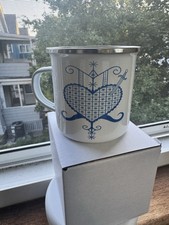
Ezili Dantò (Erzulie Dantor) Vèvè Haitian Vodou Mug Enamel Cup Souvenir
$25.00
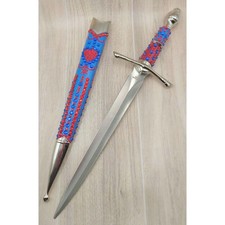
Erzulie Dantor ponya Kouto Knife 14" Ezili Dantò for Petwo Lwa Manbo Oungan
$63.00
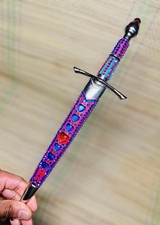
Ezili Dantò Ponya 13–14" Haitian Vodou Dagger Erzulie Dantor Petwo
$65.00