|
|
|
|
Classic Car Parts Home >
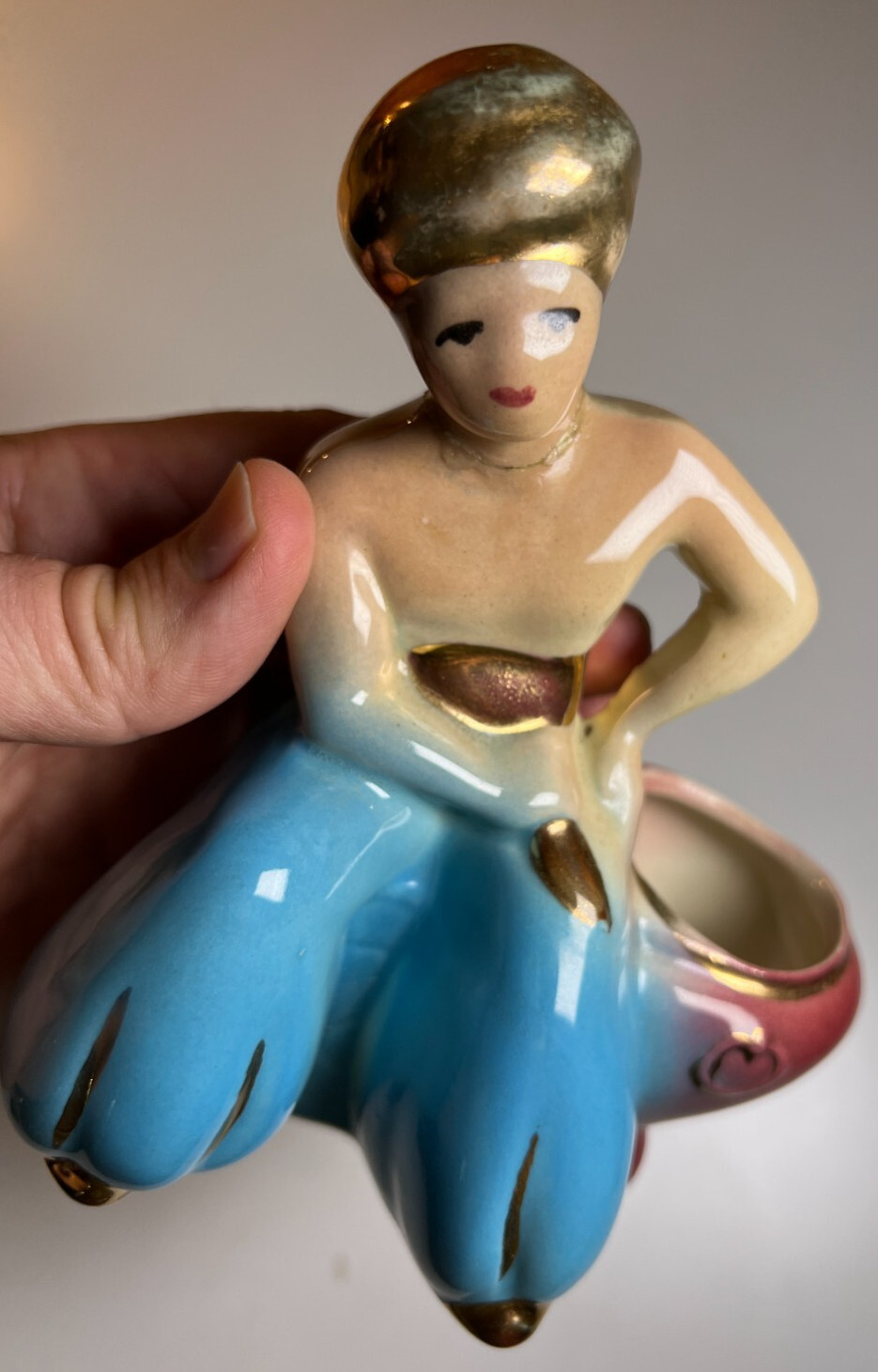
Vintage Antique Mid Century Ceramic Magic GENIE Planter Vase Figure Figural for sale

When you click on links to various merchants on this site and make a purchase, this can result in this site earning a commission. Affiliate programs and affiliations include, but are not limited to, the eBay Partner Network.

Vintage Antique Mid Century Ceramic Magic GENIE Planter Vase Figure Figural:
$70.25
- Antique
- Mid Century
- 1940s - 1950s
- Unmarked, but very likely made in Japan.
- Cold painted gold accents
- Head of the Genie looks to be been re-glued onto the planter, but this is excellent news in this case; he'll be so excited and appreciative when you use your first wish to wish-his-head-be-fixed, that he'll grant you extra wishes (duh).
- 6.25" T x 5" W overall
- I package well and ship out daily!
The genie, also known as a jinn (plural jinn or djinn), originates in pre-Islamic Arabian mythology and was later incorporated into Islamic theology and broader Middle Eastern folklore. Here's a brief historical overview of the concept: Origins in Pre-Islamic Arabia Jinn were believed to be supernatural beings made from "smokeless fire", distinct from humans (made from clay) and angels (made from light). They were invisible, often trickster-like spirits that could be helpful, mischievous, or dangerous. Early Arab tribes believed jinn inhabited desolate places, winds, or animals, and could possess or influence humans.
In Islamic Theology Jinn are mentioned frequently in the Qur'an, where they are described as creatures with free will—able to choose between good and evil. Notably, the Shayṭān (Satan), also known as Iblīs, is considered a rebellious jinn who refused to bow to Adam. Jinn live in a parallel world, have families, religions, and can be Muslim or non-Muslim. Sorcerers and soothsayers in Islamic tradition are believed to summon jinn to perform tasks.
"Genie" in Western Culture The word "genie" is a European corruption of the Arabic word "jinn", popularized through translations of The One Thousand and One Nights (Arabian Nights) in the 18th and 19th centuries. Antoine Galland’s 1704 French translation included stories like Aladdin and the Magic Lamp, where a genie lives in a lamp and grants wishes—a concept that does not appear in early Islamic texts. In Western imagination, genies became associated with: Wish granting Servitude (bound to lamps or bottles) Comedic or whimsical personalities, especially in modern film and TV (I Dream of Jeannie, Disney’s Aladdin)
Modern Depictions Today, genies are common in pop culture—often portrayed as wish-granting spirits, sometimes benevolent, sometimes malevolent. The visual archetype includes:
Related Items: 
Vintage Antique Brass Automobile Ashtray Tobacciana Early Auto Oil Gas Embossed $150.00
Vintage Antique Steel Fireman’s Metal Bucket with Bail Handle, $27.50
Antique Porcelain Portrait Miniatures Pair Hand Painted Japan Gilt Floral Frames $200.00
|
| |











